
Jiu Jitsu in Queenstown: A Complete Beginner's Guide
Thinking about training Jiu Jitsu in Queenstown? Here's everything you need to know — class types, what to expect, who teaches, and how to get started.

Industrial Fitness
March 1, 2026
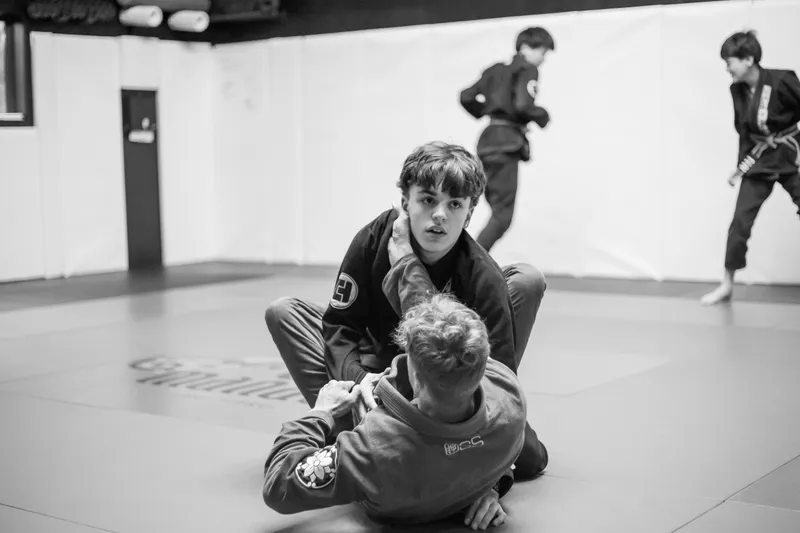
Jiu Jitsu in Queenstown: A Complete Beginner's Guide
Whether you've never stepped on a mat before or you're coming back to training after time away, here's everything you need to know about Jiu Jitsu in Queenstown.
Brazilian Jiu Jitsu is growing faster than almost any other martial art in New Zealand — and Queenstown is no exception. In the past few years, the local community has gone from a handful of dedicated practitioners training in sparse conditions to a full-fledged programme with multiple weekly classes, qualified coaches, and an international affiliation. If you've been curious about trying it, there's never been a better time or a better place.
This guide covers everything a newcomer needs to know: what BJJ actually is, why it suits the Queenstown lifestyle, what the local programme looks like, what to expect from your first class, and how to get started.
What Is Brazilian Jiu Jitsu?
Brazilian Jiu Jitsu (BJJ) is a ground-based martial art and combat sport that focuses on grappling, positional control, and submission techniques — joint locks and chokes — rather than striking. The core philosophy is that a smaller, technically skilled person can control and submit a larger, stronger opponent by using leverage and body mechanics correctly.
Unlike the martial arts you might have tried as a child, BJJ is a live art. Almost every class includes some degree of rolling — essentially live sparring on the ground — where you test your technique against a resisting partner. That feedback loop, between drilling techniques and applying them in real-time, is what makes BJJ progress so tangible. You know when something works because you can feel it.
BJJ is trained in two main formats:
- Gi (pronounced "ghee"): A traditional uniform consisting of a jacket, pants, and belt. Gripping the gi fabric is part of the game, which creates a slower, more technical style.
- No-gi: Compression shorts and a rashguard. Without fabric to grip, the emphasis shifts toward underhooks, clinches, and leg entanglements. It's faster and often more instinctive for people coming from wrestling backgrounds.
Most beginners start in gi, though both are available once you've found your footing.
Why BJJ Suits the Queenstown Lifestyle
Queenstown attracts a particular type of person: physically active, outdoors-oriented, and comfortable with challenge. Whether you're skiing, mountain biking, hiking, or surfing the Kawarau, the appeal is usually the same — you're pushing yourself in an environment that demands real skill.
BJJ fits into that mindset naturally. It's a physical puzzle. Every roll is a problem-solving exercise where strength alone rarely wins. The better you understand leverage, timing, and positioning, the more effective you become — regardless of your size. That's appealing to people who already value skill development over raw athleticism.
There's also a practical recovery angle. Many Queenstown athletes use BJJ as their off-season or cross-training activity. Skiing hammers your quads and hip flexors; BJJ develops core strength, hip mobility, and body awareness that directly transfers back to snow performance. Mountain bikers find the body control and reaction time useful. Climbers find the grip strength and tension management carry over.
And beyond the physical crossover, there's the mental dimension. A hard training session — where you're focused entirely on what's happening in front of you — has a way of clearing everything else out. For people dealing with the mental load of demanding jobs or high-consequence outdoor sports, an hour on the mat can function as a genuine reset.
Jiu Jitsu in Queenstown: The Te Manawa Programme
The Queenstown Jiu Jitsu programme at Industrial Fitness runs under the Te Manawa banner — a community and coaching team with deep roots in the sport.
Te Manawa Jiu Jitsu is affiliated with the Caio Terra Association (CTA), the organisation founded by twelve-time world champion Caio Terra. Industrial Fitness is the only CTA affiliate in Oceania, which means local students train within an internationally recognised curriculum and can compete under the CTA flag at events worldwide. That affiliation matters for serious practitioners, but it also means the fundamentals taught to complete beginners are world-class from day one.
Classes run at Industrial Fitness in Frankton — a dedicated facility at 17 Repco Boulevard with purpose-built mat space, changing rooms, and full gym access included with every martial arts membership.
Class Structure: What's on the Timetable
The programme is divided into two main streams:
Fundamentals classes are designed for beginners. You don't need any prior experience — in fact, it's better if you arrive without preconceptions. Fundamentals classes focus on core techniques: the positions that recur most often in real training (guard, side control, mount, back control), the escapes that help you recover when you're in a bad spot, and the basic submissions that underpin everything else. The pace is deliberate, the explanations are thorough, and you won't be thrown into deep water without support.
Advanced classes are for students with a working understanding of fundamentals — typically a few months of consistent training. Techniques are more complex, rolling is longer, and there's more expectation that students will problem-solve in real time.
If you're brand new, start with Fundamentals. The goal of those first classes is to help you feel comfortable on the mat, understand what's happening around you, and build enough of a foundation that you can start enjoying the live training component.
What Happens in Your First Class
Knowing what to expect makes the first class significantly less intimidating. Here's how it typically goes:
Before class: Arrive a few minutes early. Let the instructor know it's your first time. You'll be shown the space, told where to change, and given a brief overview of what the session involves. Wear comfortable athletic clothing if you don't have a gi yet — a t-shirt and shorts are fine for your first visit.
Warm-up (10–15 minutes): Most BJJ warm-ups involve movement drills: shrimping (a hip-escape motion used constantly in rolling), forward and backward rolls, breakfalls, and basic gymnastic movements. These might feel unfamiliar, but they're deliberate — they build the body awareness you'll use throughout your training.
Technique instruction (20–30 minutes): The coach demonstrates a sequence of techniques — usually two or three connected moves that build on each other. You pair up with a partner and drill them. Your partner won't be resisting at full intensity; the goal is repetition and ingraining the mechanics. Ask questions if something isn't clear.
Positional drilling (10–15 minutes): You practise a specific scenario with some resistance from your partner — for example, starting in guard and working to pass or to submit. This bridges the gap between pure drilling and live rolling.
Rolling (15–25 minutes, sometimes none in the first class): Depending on the instructor's approach for new students, you may observe rolling on your first visit, or be paired with an experienced training partner who guides you through it gently. A good training partner isn't trying to beat you — they're helping you learn.
Cool-down and questions: A short stretch and time to ask anything that came up during class.
The overall experience is designed to be manageable. You'll be confused by some things. That's normal. The point of the first few classes isn't to become good at BJJ — it's to become comfortable enough that you want to keep coming back.
Who Teaches
The coaching team at Te Manawa Jiu Jitsu brings competition experience across gi and no-gi formats, and includes internationally tested practitioners. Instructors have competed and placed at events ranging from national New Zealand tournaments through to IBJJF competitions in the United States and Europe.
What that experience translates to on the mat is technical precision and the ability to explain why a technique works, not just what to do. Good BJJ coaching is as much about problem diagnosis — "your base is off, that's why the sweep isn't working" — as it is about demonstrating movements.
The coaching approach at Industrial Fitness is known for being supportive without being soft. Beginners get real feedback delivered in a way that helps rather than discourages. The culture among training partners reflects that — experienced students take responsibility for the development of newer ones, which is how the community grows.
Training Alongside Other Disciplines
One of the genuine advantages of training at Industrial Fitness is the breadth of options under one roof. If you're interested in striking alongside your grappling, Boxing and Muay Thai classes run on the same facility. Many BJJ practitioners cross-train in both, particularly as they develop interest in MMA or simply want a more complete martial arts background.
The gym access included with membership means you can supplement your mat sessions with strength work, conditioning, or recovery in the sauna — without needing a second gym membership. It's a practical advantage in a town where options are limited and convenience matters.
Schedule and How to Book
Classes run multiple times per week, with sessions spread across mornings and evenings to suit different schedules. The full timetable — including specific class times for Fundamentals and Advanced — is available on the Jiu Jitsu class page.
If you want to visit before committing, a day pass gets you full access to the gym and any class on the timetable, including a fundamentals session. There's no contract, no joining fee, and the day pass cost is credited toward a membership if you decide to join on the same day.
Common Questions From New Students
Do I need to be fit before starting? No. BJJ will improve your fitness. Starting unfit is completely normal and expected — the coaches have seen it before and will work with you accordingly.
Is it safe? BJJ has a lower injury rate than many contact sports because submissions are trained with control and tapping out (signalling that you've been caught) is the norm. Partners stop the moment you tap. That said, like any physical activity, injuries happen — particularly if you train with reckless intensity before your body has adapted. Starting with a controlled mindset matters.
How long does it take to get a blue belt? The first formal rank above white belt is blue belt, and the average time to earn it with consistent training is 18 months to 3 years. Progress in BJJ is measured in understanding rather than time — there's no fixed timeline, which most practitioners find motivating rather than frustrating.
Do I need to buy a gi straight away? No. Come in athletic clothing for your first few sessions. Once you decide to commit, the coaching team can advise on what to buy and where to source it.
Ready to Start?
The best thing about Jiu Jitsu is also the most common barrier to trying it: it's humbling. You will be caught. You will tap. You will not be good at it straight away. And none of that matters, because neither was anyone else when they started.
If you're in Queenstown and you've been thinking about it, come in. The community is welcoming, the coaching is serious, and the mat is always there.
View the Jiu Jitsu Class Schedule | Learn About Te Manawa | Visit the Gym
Written by
Industrial Fitness
Passionate about helping others achieve their fitness goals through evidence-based training and nutrition strategies.
Related Articles
 Guides
Staying Fit Through a Queenstown Winter: An Indoor Training Guide
How to stay fit through a Queenstown winter, from beating the cold-and-dark motivation slump to conditioning for ski season and using indoor classes, weights and the sauna.
4 min read
 Guides
Strength Training in Queenstown: Where to Start
A beginner-friendly guide to strength training in Queenstown, covering why it matters, the key movements to learn first, how often to train, and how to get started with coaching.
3 min read