
What Is HYROX? A Guide for Queenstown Athletes
HYROX is the world's fastest-growing fitness race. Here's what it involves, why it suits Queenstown athletes, and how to train for your first event.

Industrial Fitness
March 8, 2026

What Is HYROX? A Guide for Queenstown Athletes
Everything you need to know about the world's fastest-growing fitness race — what it involves, why it suits Queenstown athletes, and how to start training.
If you've been around a gym in the past couple of years, you've probably heard someone mention HYROX. Maybe you've seen it on a class timetable, noticed people doing sled pushes with unusual urgency, or watched a mate disappear down a rabbit hole of race-day footage on Instagram. But if you haven't actually looked into it, the whole thing can seem a bit mysterious.
This guide breaks down what HYROX actually is, what a race involves, who it's for, and how to train for one in Queenstown.
HYROX in 60 Seconds
HYROX is a global fitness race. Every event follows the same format, anywhere in the world: 8 rounds of 1km running, each followed by a functional workout station. That's it. No surprises, no variation, no "unknown and unknowable" element. You know exactly what's coming, which means your performance comes down to preparation.
The total distance is 8km of running. Between each kilometre, you complete one of eight workout stations — always in the same order. A typical race takes between 60 and 90 minutes for a well-prepared athlete, though first-timers often finish in the 90 to 120 minute range. There's no cut-off time and no elimination. You just finish.
That standardised format is what makes HYROX different from obstacle course races or CrossFit competitions. You're not climbing walls or doing handstand walks. You're running and grinding through functional movements that anyone can learn.
The Eight Stations
Every HYROX race follows this sequence:
- 1km Run → SkiErg (1,000m) — Upper body and cardio endurance right out of the gate.
- 1km Run → Sled Push (50m) — Legs and lungs. The weight varies by division.
- 1km Run → Sled Pull (50m) — Grip and posterior chain. You're pulling a weighted sled toward you via a rope.
- 1km Run → Burpee Broad Jumps (80m) — The station everyone dreads. Exactly what it sounds like.
- 1km Run → Rowing (1,000m) — Pacing matters here more than raw power.
- 1km Run → Farmers Carry (200m) — Grip endurance and mental toughness under fatigue.
- 1km Run → Sandbag Lunges (100m) — Quads and stability when your legs are already spent.
- 1km Run → Wall Balls (75/100 reps) — The final push. Full-body coordination when you have nothing left.
The beauty of this format is that it tests everything — aerobic capacity, strength endurance, grip, mental resilience — without requiring any specialised skill. Every movement is learnable. The challenge is doing them all back to back after running 8km.
Why HYROX Suits Queenstown Athletes
Queenstown attracts people who like to push themselves outdoors — skiing, mountain biking, trail running, climbing. HYROX appeals to the same mindset for a few reasons.
It rewards all-rounders. You don't need to be the fastest runner or the strongest lifter. You need to be competent at both and able to sustain effort across a long event. If you already do a mix of cardio and strength work, you're closer to race-ready than you think.
The training transfers. Sled pushes build the same leg drive you use climbing steep terrain. Farmers carries develop the grip and core stability that helps with everything from mountain biking to skiing moguls. The running base translates directly to trail running season.
It's a measurable goal. Unlike general fitness, HYROX gives you a finish time. You can track it, improve it, and compare it to the global leaderboard. For people who are motivated by targets, that structure is powerful.
It's social. HYROX offers doubles and relay divisions. You can race with a mate, splitting the stations between you. That makes the first event far less intimidating and twice as fun.
Who Is HYROX For?
Genuinely anyone with a base level of fitness. You don't need to be an athlete. You don't need to be able to run a half marathon or deadlift twice your bodyweight. You need to be able to run 1km at a moderate pace and handle basic functional movements under fatigue.
Most people who compete in HYROX aren't elite. They're everyday gym members who wanted a goal beyond "get fitter." The open division uses manageable weights (for sled push, that's 102kg for men and 78kg for women on a wheeled sled — lighter than it sounds), and there's no time pressure beyond your own ambition.
If you can currently handle a 40-minute strength and conditioning class and run a few kilometres without stopping, you have enough of a base to start HYROX-specific training.
How to Train for HYROX
HYROX training isn't complicated, but it does require a structured approach. You're training three energy systems simultaneously: aerobic endurance (the running), strength endurance (the stations), and the ability to transition between the two without falling apart.
Running Base
You need to be comfortable running 8–10km at a steady pace. That doesn't mean fast — it means sustainable. Most of your run training should be at conversational pace, with one session per week including intervals or tempo work. If you're not currently a runner, start with three 20-minute easy runs per week and build from there.
Station-Specific Work
Each station has its own demands. The most effective approach is to train the movements individually first, then start combining them with running as race day approaches. Key areas to focus on:
- Sled work — Push and pull at race weight. Practice pacing rather than sprinting.
- SkiErg and rowing — Technique matters. Efficient movement saves minutes over race distance.
- Wall balls — Rhythm and breathing. Break them into manageable sets from the start.
- Farmers carry and sandbag lunges — Train these fatigued. Do them after a run or at the end of a session.
- Burpee broad jumps — Practice the movement pattern. Find a sustainable pace you can maintain for 80m.
Hybrid Sessions
The real challenge in HYROX isn't any single station — it's the transitions. Your heart rate is elevated from running, then you need to produce force immediately. Training this specifically is what separates a good time from a rough experience. Run 1km, immediately perform a station exercise, then run again. Start with two or three rounds and build to five or six.
Recovery
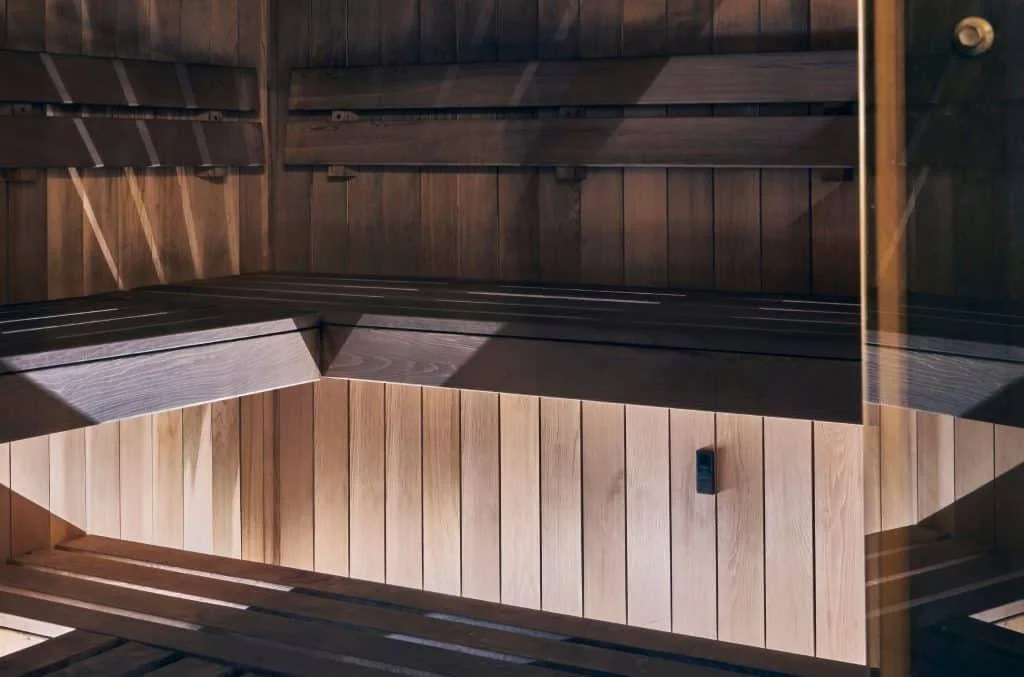
HYROX training volume can add up quickly, especially when you're combining running with heavy functional work. Don't neglect recovery. Sauna sessions, mobility work, and genuine rest days are part of the programme, not extras. At Industrial Fitness, the sauna is included with every membership — use it.
HYROX Training in Queenstown
Industrial Fitness runs dedicated HYROX classes as part of the weekly timetable. These sessions are designed specifically around the race format — combining running with station work in structured intervals that build race-day fitness progressively.
The classes are coached, which matters more than you might think. Proper pacing strategy, technique corrections on the SkiErg and rower, and learning when to push versus when to conserve can shave minutes off your finish time. Going in without a plan is the most common mistake first-time HYROX athletes make.
Classes are included with every membership — no extra charge. If you're already a member training boxing, strength, or any other discipline, you can add HYROX sessions into your week without paying more.
The gym also has the equipment you need to train outside of class: SkiErg, rowers, sleds, sandbags, wall ball targets, and farmers carry handles. Not every gym in Queenstown has that setup, and trying to train for HYROX without the right equipment is like training for a swimming race in a paddling pool.
Your First HYROX Race
HYROX events run in major cities across the world, including several in Australasia each year. New Zealand has hosted events in Auckland and Christchurch, with the calendar expanding annually. Many Queenstown athletes travel to events as a group, which makes the whole experience more enjoyable.
Tips for your first race:
- Enter the Open division. The weights are manageable and there's no qualifying standard.
- Consider Doubles. Racing with a partner halves the workload and doubles the fun.
- Don't start too fast. The most common mistake is sprinting the first 1km. You have seven more to go.
- Practice transitions. Moving efficiently between running and stations saves more time than running faster.
- Have a pacing plan. Know your target split for each 1km run and each station before race day.
Start Training
If you've been looking for a fitness goal that goes beyond the gym — something with a date, a format, and a finish line — HYROX is worth considering. The training is practical, the community is supportive, and the race itself is one of those experiences that stays with you.
At Industrial Fitness, you can train for HYROX alongside everything else — strength classes, martial arts, yoga, and open gym time. It all lives under one roof with one membership.
Come in, try a class, and see if it clicks.
View the HYROX Class Schedule | Browse All Classes | Get in Touch
Written by
Industrial Fitness
Passionate about helping others achieve their fitness goals through evidence-based training and nutrition strategies.
Related Articles
 Guides
Staying Fit Through a Queenstown Winter: An Indoor Training Guide
How to stay fit through a Queenstown winter, from beating the cold-and-dark motivation slump to conditioning for ski season and using indoor classes, weights and the sauna.
4 min read
 Guides
Strength Training in Queenstown: Where to Start
A beginner-friendly guide to strength training in Queenstown, covering why it matters, the key movements to learn first, how often to train, and how to get started with coaching.
3 min read